
Where Should Your Downspouts Drain To Protect Your Home
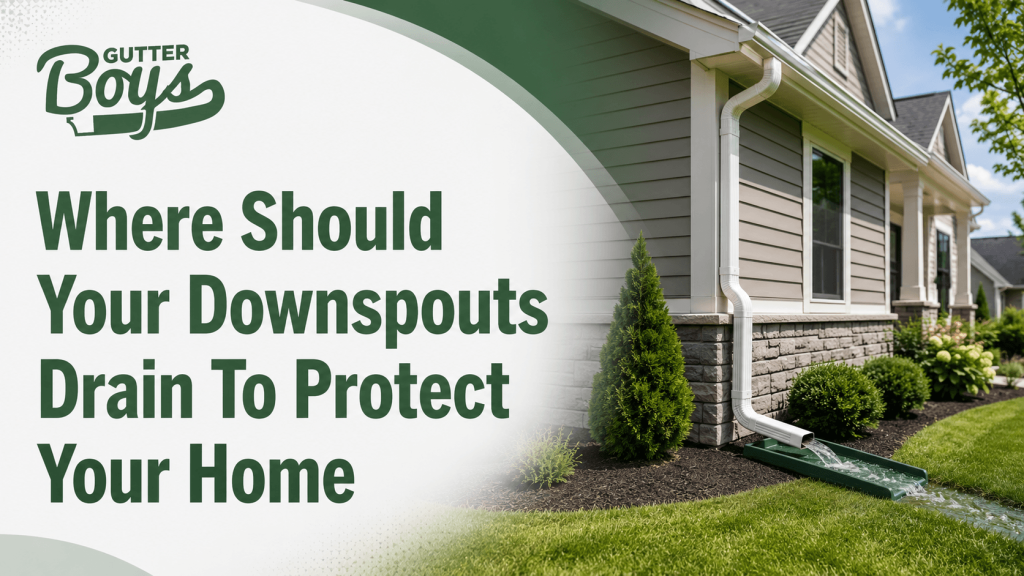
Downspouts have one simple job: move roof water away from the house. When that happens, rainwater leaves the gutter system, flows to a safer area, and drains without soaking the foundation. When they drain in the wrong spot, water can collect along the base of the home and create problems that build slowly.
Many homeowners focus on the gutters and forget about where the water goes after it reaches the ground. That final path matters. A clean gutter system still causes trouble when the downspout dumps water beside basement walls or low landscaping beds.
Why Downspout Drainage Matters
Roof runoff can add up fast during heavy rain. A large roof sends gallons of water into the gutter system, and every downspout becomes an exit point. If that water lands too close to the foundation, the soil around the home can become saturated.
That moisture can lead to basement dampness, erosion, soil movement, foundation pressure, and slick ice near walkways during colder months.
Best Downspout Drainage Distances
The right distance depends on yard slope, soil type, roof size, and drainage conditions. Many homes benefit from downspout extensions that move water at least 4 to 6 feet away from the foundation. Longer distances may be needed on flat yards, clay soil, or areas with past water problems.
| Home Or Yard Condition | Suggested Drainage Approach | Why It Helps |
| Sloped Yard Away From Home | Short extension may work | Gravity helps move water |
| Flat Yard | Longer extension or drain line | Water needs more guidance |
| Clay Soil | Extended discharge point | Soil holds moisture longer |
| Basement Or Crawl Space | Move water farther away | Reduces moisture pressure |
| Heavy Roof Runoff | Larger or extra drainage path | Handles stronger water flow |
Signs Downspouts Drain Too Close
Drainage problems are often easy to spot after a storm. Walk around the home and look for where water sits.
Watch for these warning signs:
- Water pooling beside the foundation
- Mulch washing out under downspouts
- Soil channels forming in landscaping
- Damp basement walls or musty smells
- Ice patches near walkways in winter
- Stains on siding near the ground
- Downspout water flowing toward the home
Small signs can point to a larger drainage pattern. Catching them early can help prevent bigger repair costs.
Where Downspouts Should Drain
A downspout should drain to a location that carries water away from the structure and keeps it from returning to the foundation. The best discharge point is usually a lower area of the yard, a safe lawn section, a drainage swale, or an approved storm drainage route.
Lawn Areas
A lawn can handle runoff when the ground slopes away from the home and water spreads out instead of cutting a channel through the grass. Splash blocks or extensions can help slow the flow.
Drainage Swales
A swale is a shallow landscaped channel that moves water across the yard. It can be useful when several downspouts need to drain toward the same safe area.
Underground Drain Lines
Underground drain lines can move water away cleanly when surface extensions would cross walkways, driveways, or busy lawn areas. These systems need proper slope.
Places To Avoid Draining Downspouts
Some discharge points create more problems than they solve. Downspouts should not empty directly beside basement walls, onto steep mulch beds, across front steps, or into areas that already hold water.
Avoid draining into:
- Window wells
- Driveways that slope toward the garage
- Walkways used daily
- Neighboring property
- Low spots near the foundation
- Soil that already stays soggy
- Areas near air conditioning pads
A simple extension can often correct the issue, but some homes need a more planned drainage setup.
How Gutters And Downspouts Work Together
Downspouts cannot fix a gutter system that is clogged, undersized, sagging, or sloped incorrectly. If water spills over the gutter edge before it reaches the downspout, the discharge point is only part of the problem.
Routine rain gutter cleaning helps water reach the downspouts instead of backing up along the roofline. When leaves, pine needles, shingle grit, or mud block the system, runoff can overflow and fall beside the foundation.
If water leaks from seams, pulls behind the gutter, or escapes from damaged sections, rain gutter repair may be needed before the drainage path can work correctly.
When Extensions Are Enough
Downspout extensions are one of the easiest ways to improve drainage. They attach to the bottom of the downspout and move water farther into the yard. Some are rigid. Others are flexible. Some flip up for mowing.
A basic extension may be enough when the yard slopes away from the home and the water has a clear path. Place the extension where it will not become a tripping hazard or block regular lawn care.
Extension Planning Tips
- Aim water away from the foundation
- Keep discharge away from walkways
- Use splash blocks where needed
- Check extensions after storms
- Move water toward a safe slope
Quick Check Before Rain
Make sure the outlet is open, attached, and pointed toward a safe drainage area before storm season starts.
When The Gutter System Needs More Help
A home may need more than extensions if downspouts are too few, too small, poorly placed, or unable to handle roof runoff. Large roof sections may need additional downspouts so water does not overload one exit point.
New construction, remodeling, and homes with repeated drainage issues may benefit from professional rain gutter installation planned around roof size, slope, and runoff volume.
Older systems with rust, sagging, heavy leaks, or repeated overflow may need rain gutter replacement to restore dependable water control. Homes near trees may also benefit from rain gutter guards to reduce debris buildup that blocks water flow.
Final Thoughts On Downspout Drainage
Downspouts should drain far enough from the home to keep roof runoff away from the foundation, basement, siding, and walkways. For many homes, that means using extensions, splash blocks, swales, or underground drain lines to guide water safely.
The right drainage path depends on the home, the roof, and the yard. When gutters stay clean and downspouts carry water to the right place, the entire system protects the home more effectively through every season.


